Essential Steps for Reporting Car and Truck Accidents in Oregon
You’ve been in a car or truck accident. Your vehicle is damaged, and maybe you are injured. Occupants might be injured. Other drivers may have injuries. Chances are, after a car accident you aren’t thinking about filing paperwork. Still, Oregon law has reporting requirements after a car crash or truck crash that can impact your ability to recover for your injuries and property damage later.
Pacific Injury Law Firm
Published July 24, 2020 · 3 min read
Reporting Your Oregon Car Accident is a Must
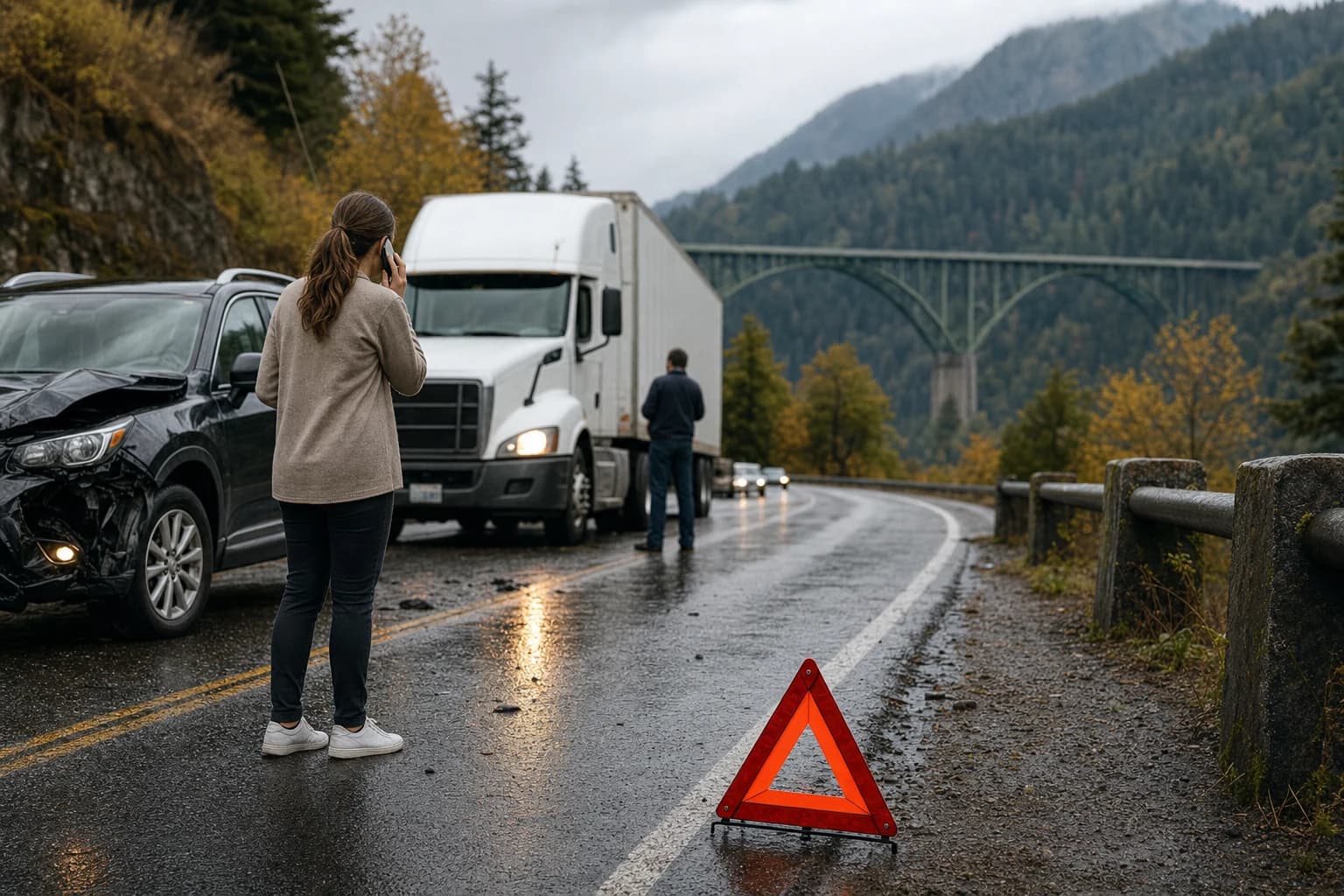
Your day has just been upended. You’ve been in a car or truck accident. Your vehicle is damaged, and maybe you are injured. Occupants might be injured. Other drivers may have injuries. Most people have a flood of worries and questions at the time of a car accident. Am I ok? Are others ok? How much will it cost to repair or replace my car? Do I need a personal injury lawyer? How will I pay for this?
Chances are, after a car accident you aren’t thinking about filing paperwork. Still, Oregon law has reporting requirements after a car crash or truck crash that can impact your ability to recover for your injuries and property damage later.
Reporting to the Oregon Department of Transportation
The first is the requirement to report the Oregon car accident to the Department of Motor Vehicles and Department of Transportation. Generally speaking, an accident occurring on a public road resulting in damage to the property of any person in excess of $2,500 is must be reported to the Oregon Department of Transportation (opens in a new tab). The general that trigger the need to report are:
- The cost to repair damage to any motor vehicle is over $2,500, even if your vehicle was the only one damaged;
- The car crash results in a vehicle being towed from the scene;
- Injury or death is caused by the motor vehicle accident; or
- Damage to any person’s property other than the vehicle involved in the accident is more than $2,500. Generally, this car accident report to the DMV must be reported within 72 hours of the accident (opens in a new tab). A reporting form from the DMV is available here (opens in a new tab). The failure to report an accident. Failing to report an accident can result in a traffic citation, and can also be used as evidence against you when trying to recover for injuries in the accident.
Reporting the Oregon car or truck accident to law enforcement
In addition to reporting to the Department of Transportation, the same requirements for reporting an accident to the DMV apply to report the accident to law enforcement (damage over $2,500, injury or death, etc.).
Liability for Not Investigating
In addition to the reporting requirements, Oregon law requires drivers to perform specific duties when the driver knows or has reason to believe that the driver has been involved in an accident. Such requirements include, but are not limited to:
- Immediately stopping the vehicle at the scene of the collision or as close as safely possible to the scene of the collision and reasonably investigating what the driver’s vehicle struck.
- Exchanging (or providing such information to an unattended vehicle):
- The driver’s name and address,
- The name and address of the owner of the driver’s vehicle
- The name and address of any other occupants of the driver’s vehicle; and
- If the driver’s vehicle is a motor vehicle, the registration number of the motor vehicle,
- The name of the insurance carrier covering the motor vehicle,
- The insurance policy number of the insurance policy insuring the motor vehicle
- The phone number of the insurance carrier. When a person is convicted for failing to perform duties of a driver when property is damaged failing to perform duties of a driver to injured persons (opens in a new tab), a violator may be required to pay damages caused by the person as a result of the incident or accident.
Let Our Car Accident Lawyers Report For You
Reporting your accident, although probably low on your priorities after a car accident, is still a fast and necessary part of building a recovery after being injured in a motor vehicle accident. If you need help with this process, the Oregon car and truck accident lawyers at Pacific Injury Law Firm can not only complete the report for you if you (assuming you call quickly enough), but can also help you build your case towards financial recovery. Call or use your online scheduler to set up a free consultation today.
Talk with an Oregon injury lawyer
Free initial consultation. No-obligation case review.
Request a consultation(971) 277-3811This article is general information, not legal advice about your situation.
Clear advice before the process gets louder
Insurance calls, medical bills, missed work, and uncertainty tend to arrive at the same time. The first job is to steady the situation: understand the facts, preserve useful records, and talk through the legal options that fit your Oregon injury claim.

“... I was referred to Adam who was able to take my case and quickly get it resolved for more than I expected. I was very pleasantly surprised by his attention to detail and tenacious negotiating tactics... Adam handled everything to make sure I received the maximum compensation for my injuries. If you need a good personal injury lawyer you just found one.”
Past results do not guarantee a similar outcome.
Related reading
In Oregon, navigating the complexities of wrongful death claims demands a nuanced understanding of state-specific statutes. Our comprehensive guide demystifies the process, providing essential insights on eligibility, filing deadlines, and potential damages. This resource is invaluable for families seeking justice and compensation in the wake of a tragic loss within the bounds of Oregon law.
Learn moreEssential Guide to Oregon Car Accident Claims: Key Facts You Must Know
Navigating car accident claims in Oregon demands a nuanced understanding of state-specific regulations. This comprehensive guide elucidates five pivotal facts essential for claimants, including the statute of limitations, comparative negligence rules, and the role of personal injury protection (PIP) insurance. Empower your pursuit of rightful compensation with this indispensable insight into Oregon's legal landscape.
Learn moreOregon Car Injury Claim Settlement Factors
This guide explains factors that may affect an Oregon car injury claim, including evidence, medical records, insurance coverage, negotiation, and case timing.
Learn more